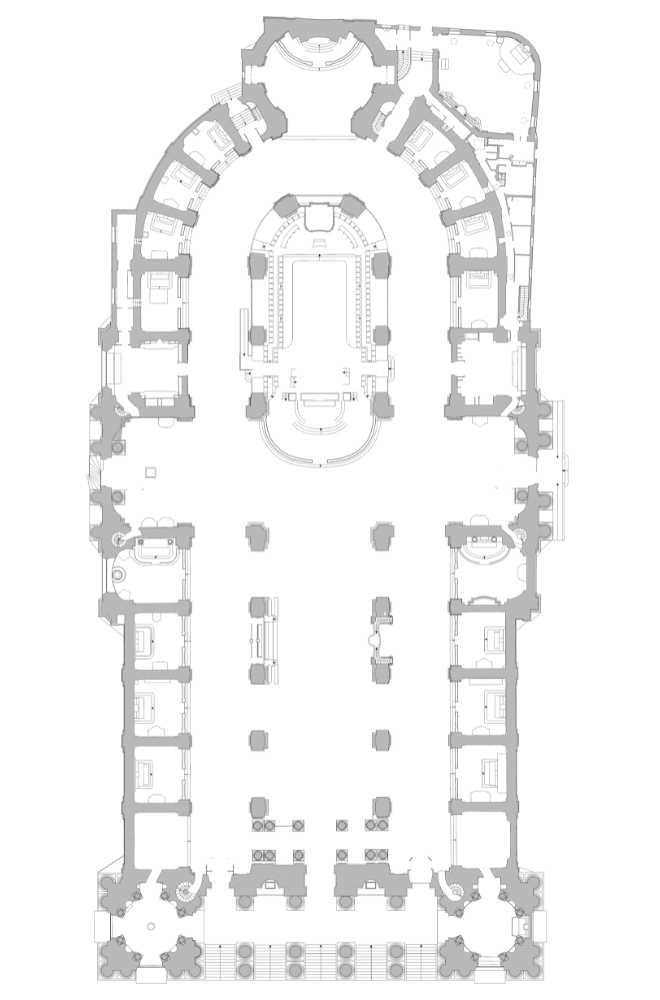
7,000 pipes and a sound unchanged since 1862
The City of Paris owns nearly 130 organs, the largest collection in the world. In the first episode of its series devoted to these instruments, it focuses on the gallery organ of Saint-Sulpice: with 102 stops spread over five manuals and 7,000 pipes, it is the largest ever built by Aristide Cavaillé-Coll. Both its case and the instrument itself are listed historic monuments.
The church received its first great organ in 1781, the work of François-Henri Clicquot. It narrowly escaped the Revolution: according to the titular organist Daniel Roth, an organ blower is said to have had the idea of placing seals on the door. Yet in 1832 Mendelssohn, passing through Paris, judged that the instrument ‘sounds like a chorus of old women’. A first restoration was not enough and, in 1854, the rebuilding was entrusted to Cavaillé-Coll.
Inaugurated in 1862, the new organ retains all of Clicquot's pipes, or 40% of the total, so that it can be used to play the 17th-, 18th- and 19th-century repertoires. The project cost three times more than planned and brought the organ builder to the brink of bankruptcy. The instrument is one of the few to have escaped the alterations of the 20th century: it is a typically Cavaillé-Coll sound that still rings out beneath the vaults. To find out more about the building, visit our Discover the church page.
Further reading
- Aristide Cavaillé-Coll, organ builder (Wikipedia)
- Saint-Sulpice church page on paris.fr (in French)
- Saint-Sulpice church entry on the Ministry of Culture's Plateforme ouverte du patrimoine (in French)
Source: City of Paris (in French), updated 23 March 2023. Summary written by the Fonds Saint-Sulpice; preview © City of Paris; cover photo: Selbymay, Wikimedia Commons, CC BY-SA 3.0.
Take part in the restoration of Saint-Sulpice
Every project is made possible by the generosity of donors and patrons. Explore the projects under way, the history of the church or support the work directly.