Saint-Sulpice church
INTRODUCTION
An iconic Parisian monument
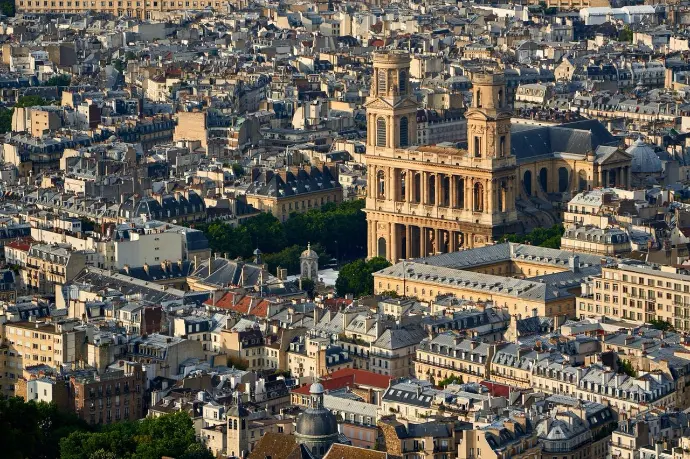
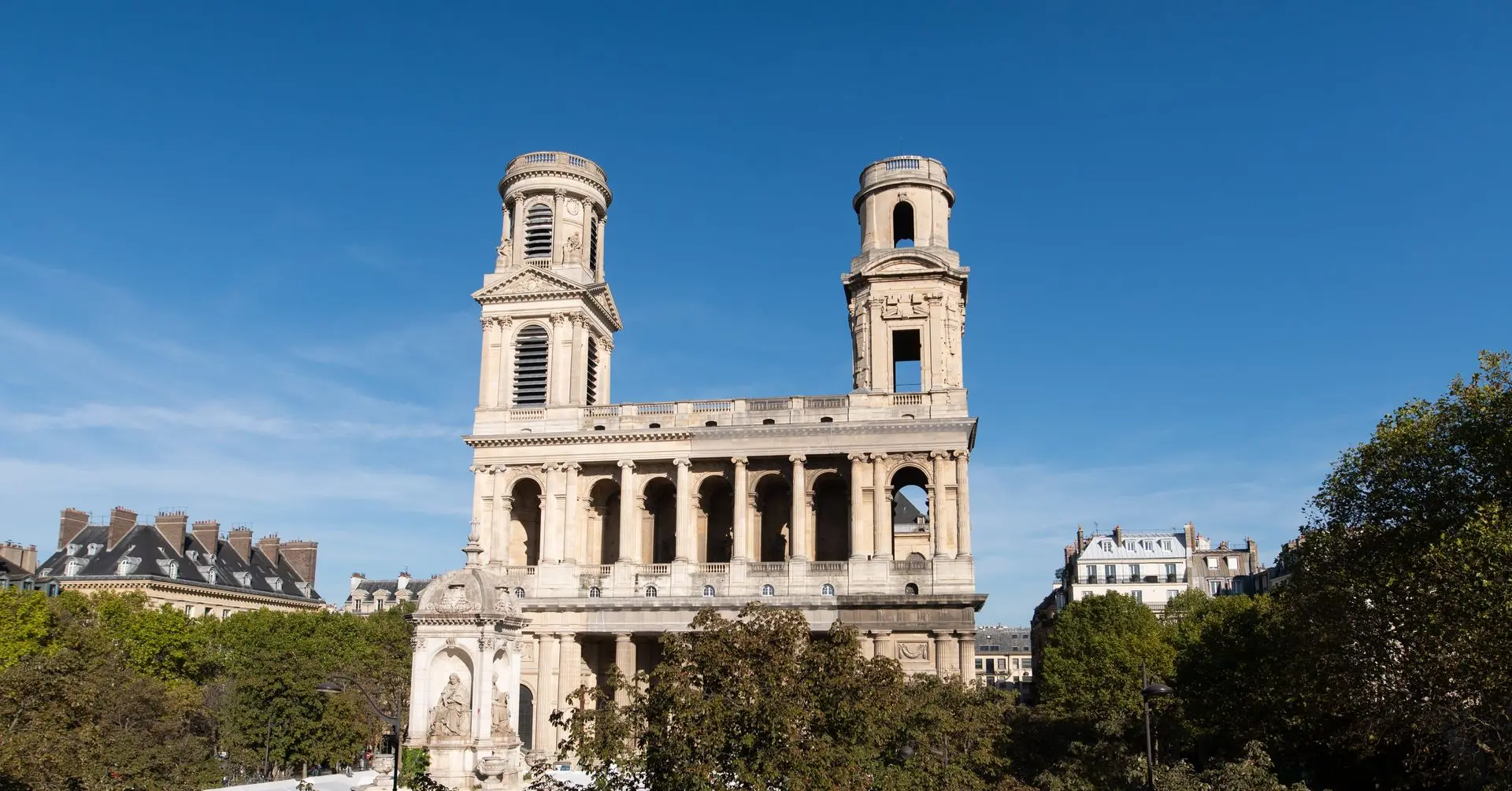
A masterpiece of neoclassical architecture, Saint-Sulpice is the largest church in Paris, dedicated to Saint Sulpice the Pious, Archbishop of Bourges. Its size is comparable to that of Notre-Dame: 120 meters long, 33 meters high under the vault, and 57 meters wide. It has been classified as a Historic Monument since 1915.
Built on foundations dating back to the Middle Ages, the church has become an outstanding example of French classical architecture. Construction of the new building began in 1646 under the direction of architect Christophe Gamard (1590–1654), under the high patronage of Anne of Austria, Queen of France and mother of Louis XIV.
Blending Baroque and classical influences, the project evolved with successive architects including Daniel Gittard (1625–1686), Gilles-Marie Oppenord (1672–1742) and Jean-Nicolas Servandoni (1695–1766). Servandoni won the competition held in 1733 for the design of the façade.
Behind the Fountain of the Four Cardinal Points, the church façade — originally topped with a pediment — is made up of two superimposed architectural orders of unequal width. Drawing inspiration from London’s St Paul’s Cathedral, the theatrical architect revived the grandeur of the Greco-Roman order between 1735 and 1745. His innovative use of columns as structural elements rather than merely decorative features won out over the proposals of Meissonnier and Oppenord.
Unfortunately, Servandoni’s work was incomplete at the time of his death; it was continued by Oudot de Maclaurin.
Did you know?
The Fountain of the Four Cardinal Points is named not only because it is oriented in the four directions, but also because it features four great 17th-century bishops — Bossuet, Fénelon, Fléchier and Massillon — each looking toward one direction.
None of them were ever actually made cardinals, hence their being not cardinals.
AN EXCEPTIONAL CHURCH
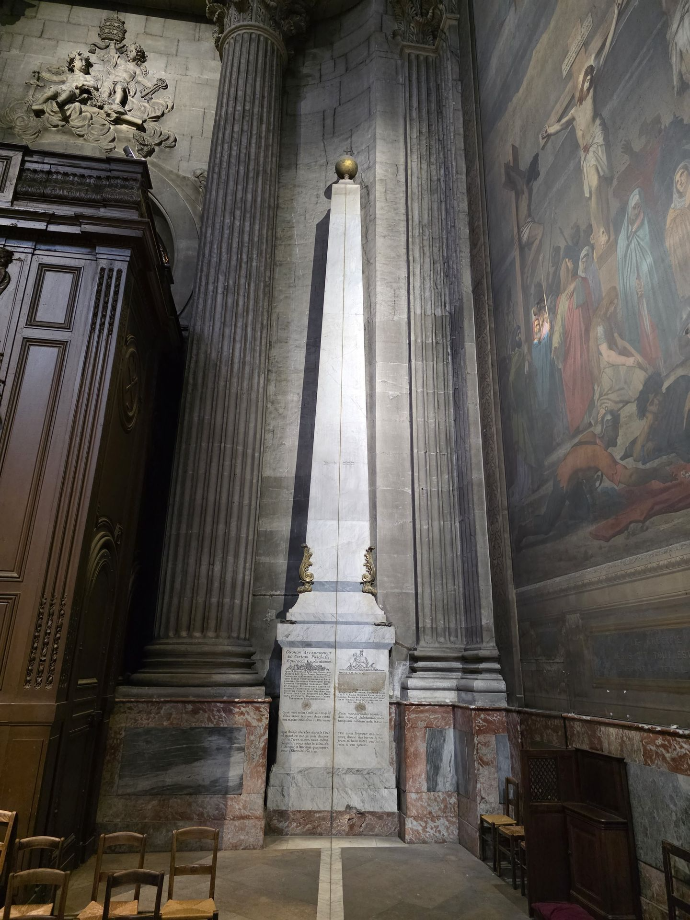
The Gnomon
One of the most famous features of the church is the astronomical gnomon installed in the 18th century by English astronomer Henry Sully (1680–1728). This device was used to track the position of the sun and calculate the date of Easter.
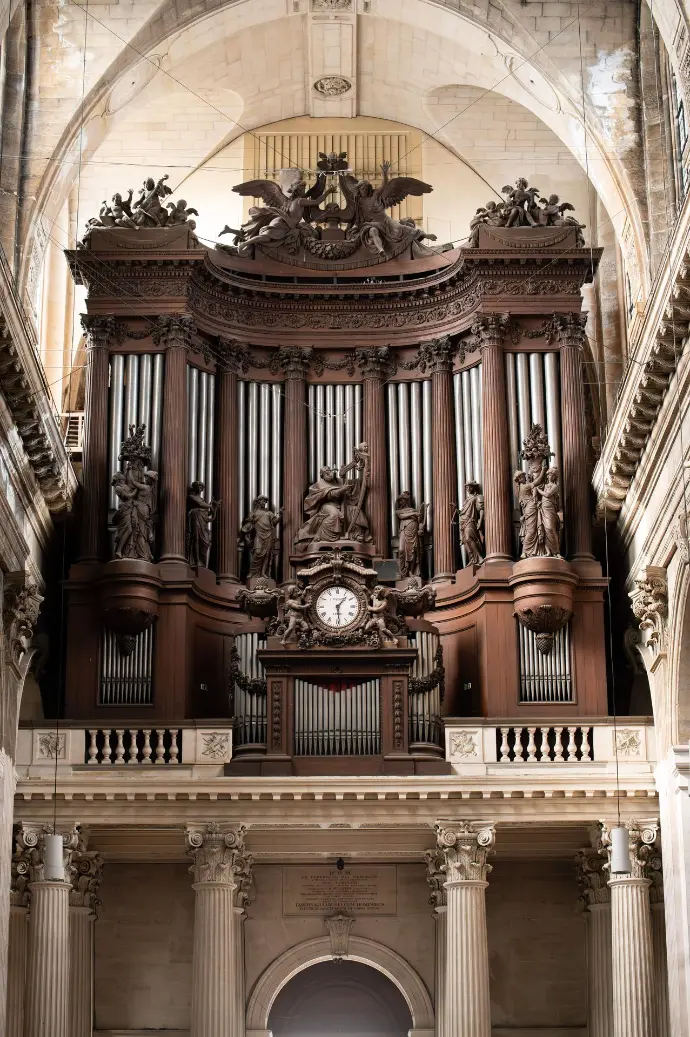
The Great Organ
Saint-Sulpice has also been an important musical venue in Paris since the Enlightenment, thanks to its celebrated organ. Originally built by organ maker François Clicquot (1774–1805) at the end of the 18th century, it was completely rebuilt in 1862 by Aristide Cavaillé-Coll (1811–1899).
AN EXCEPTIONAL CHURCH
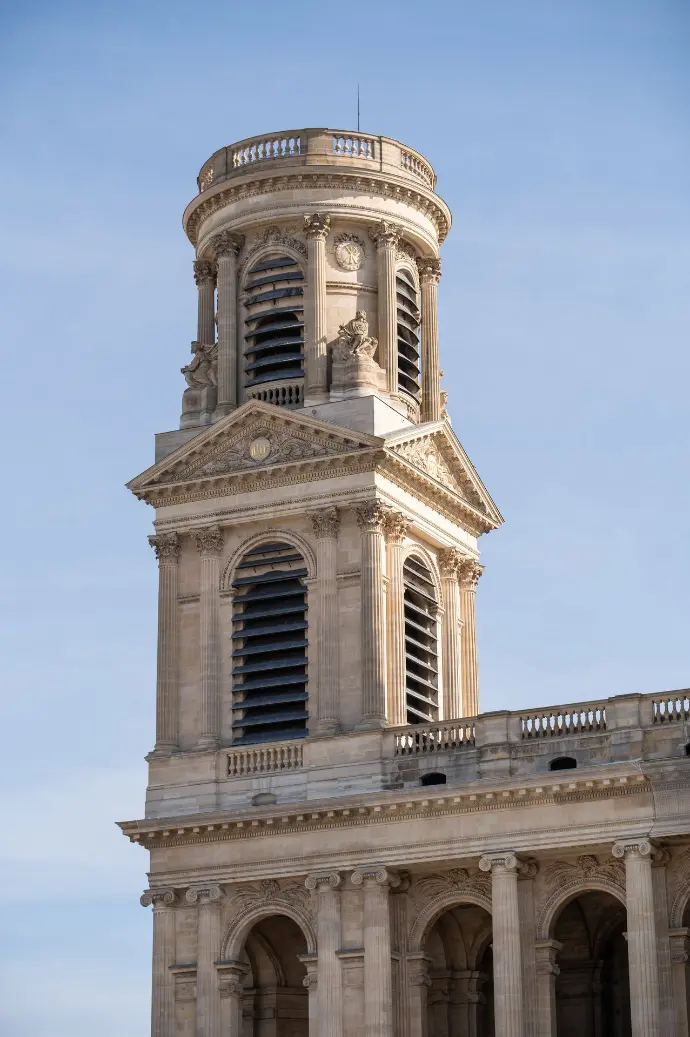
Saint-Sulpice’s silhouette is recognizable in the Parisian skyline due to the asymmetry of its towers. In the late 18th century, architect Jean-François Chalgrin (1739–1811) attempted to unify the north tower with the lower orders of the façade by adding columns and statues by Louis Boizot. The south tower, standing 5 meters lower, remained unfinished due to the halt of construction in 1789.
ITS HERITAGE
Exceptional works of art
The Nineteen Chapels
Saint-Sulpice consists of nineteen chapels decorated across different periods.
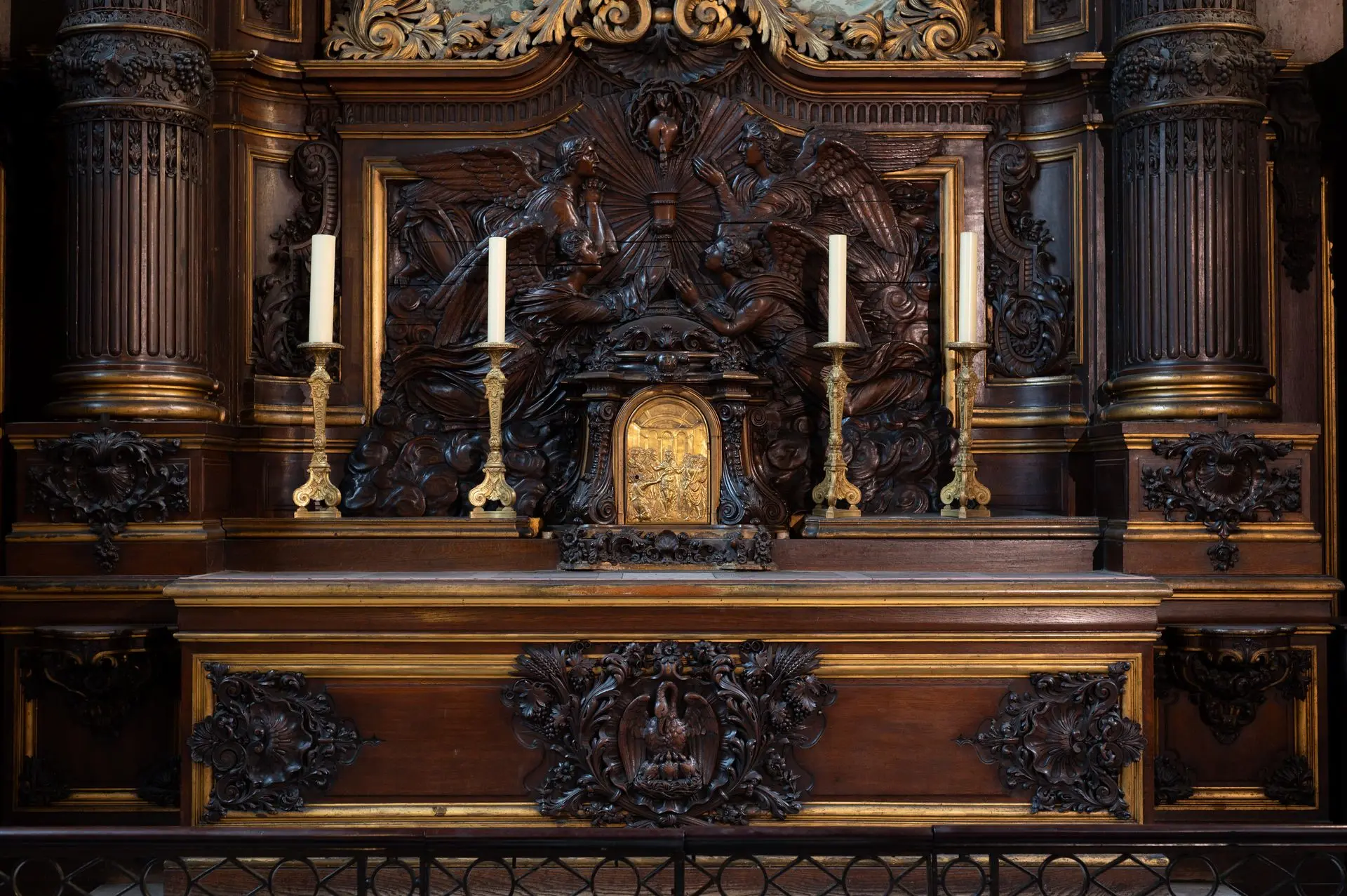
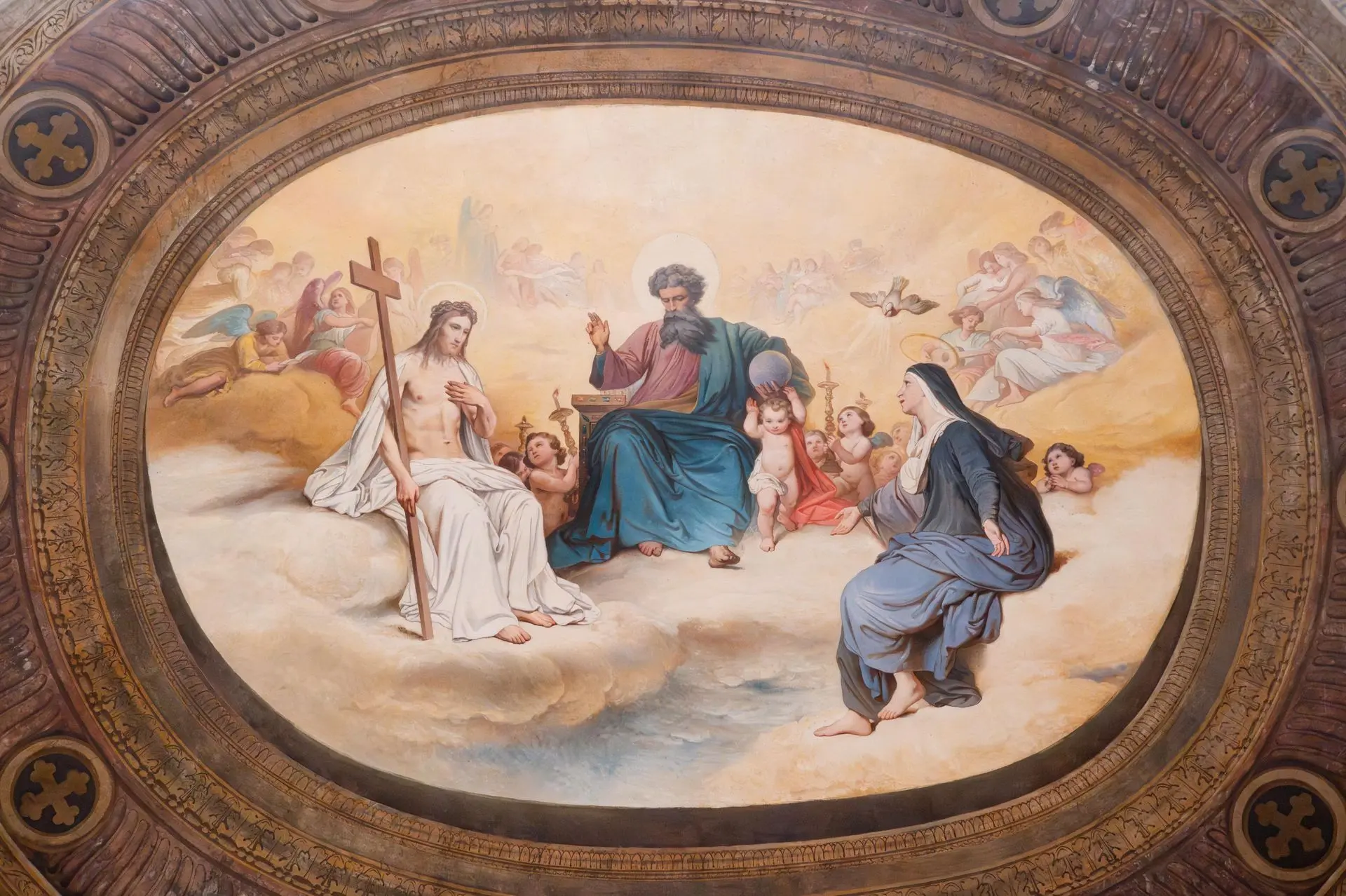
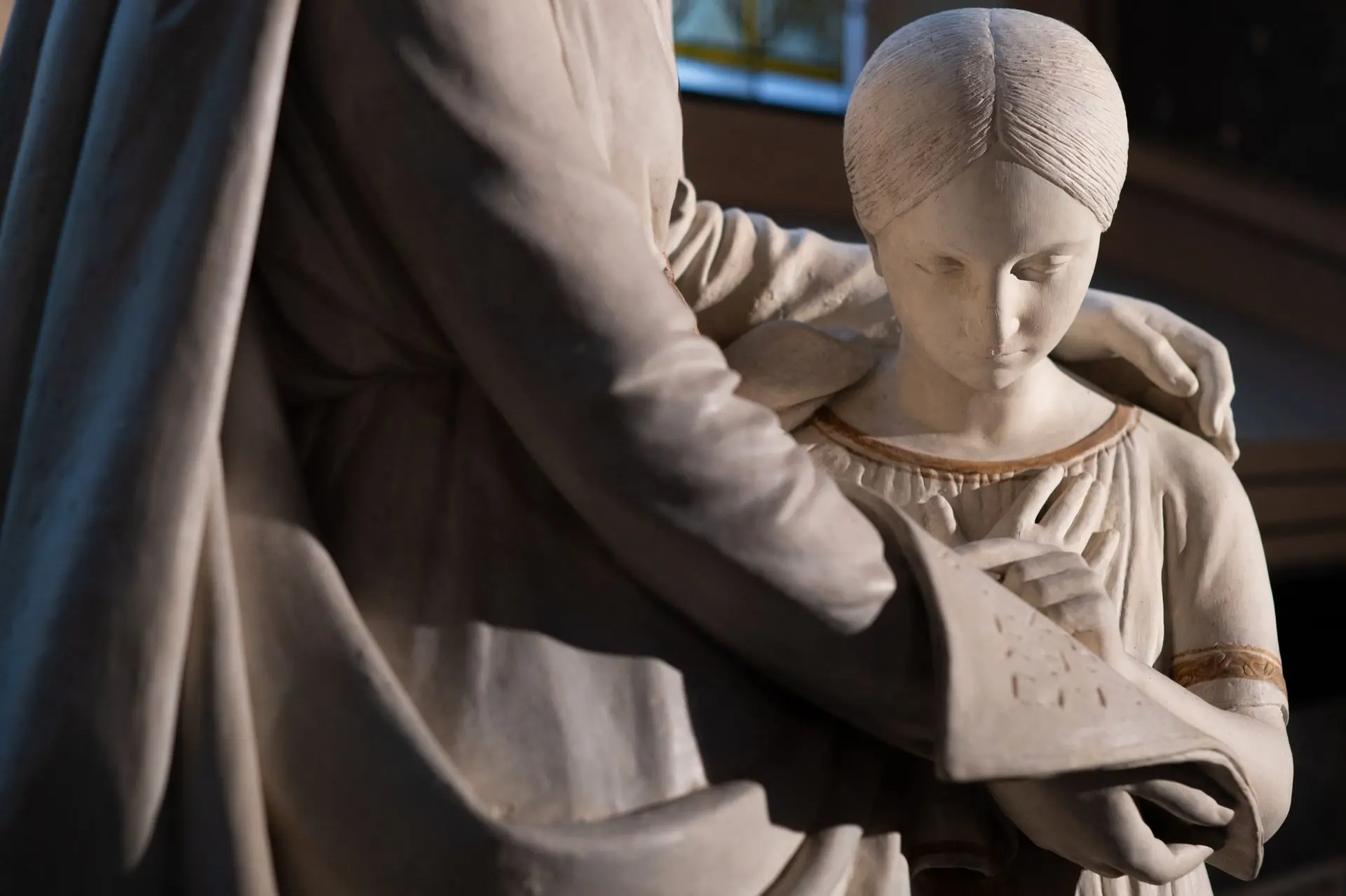
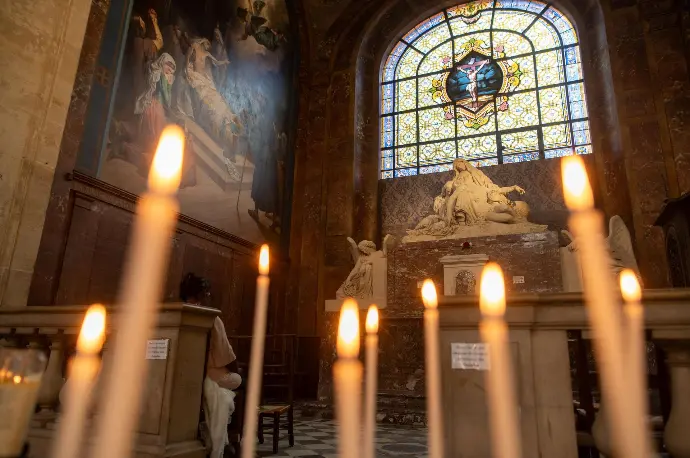
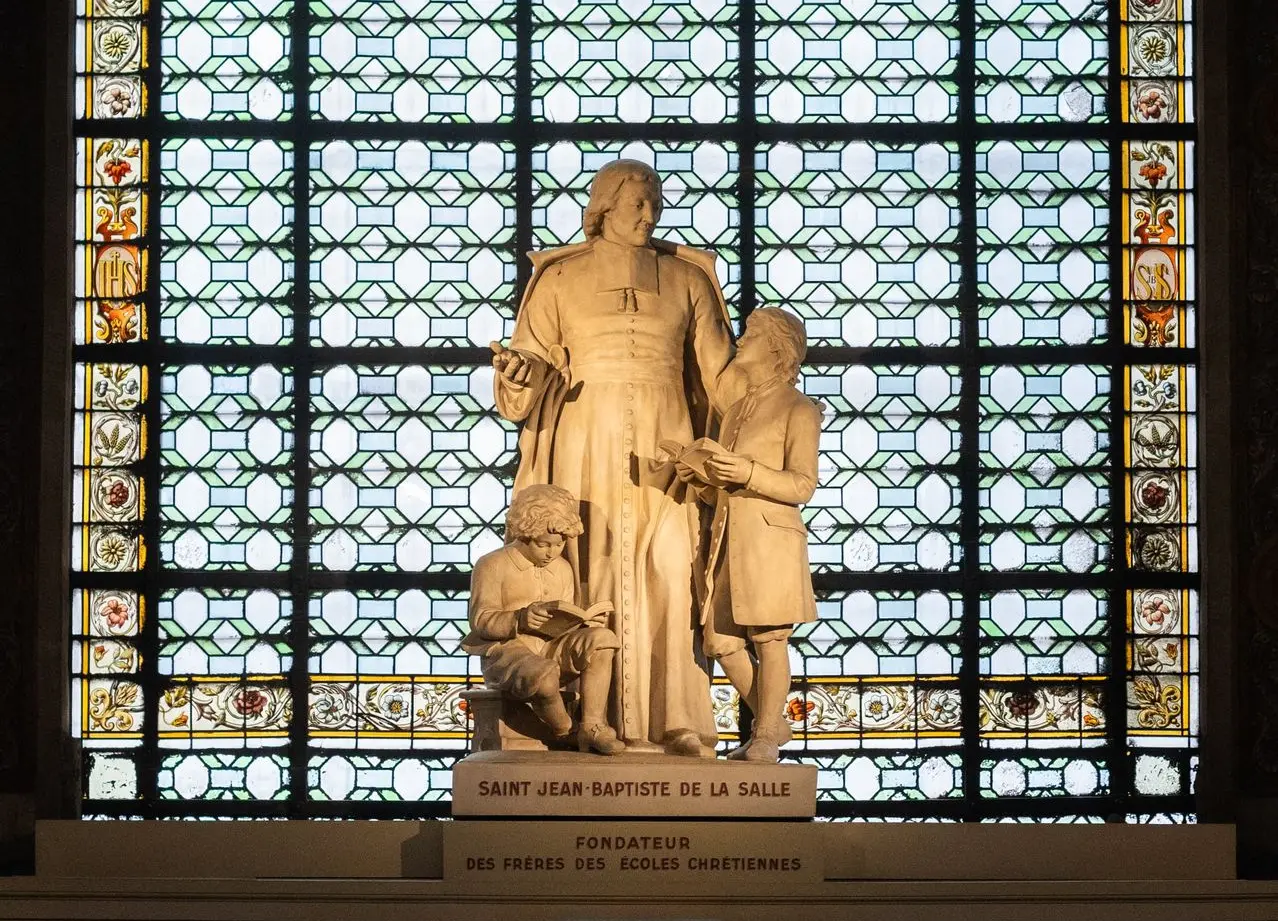
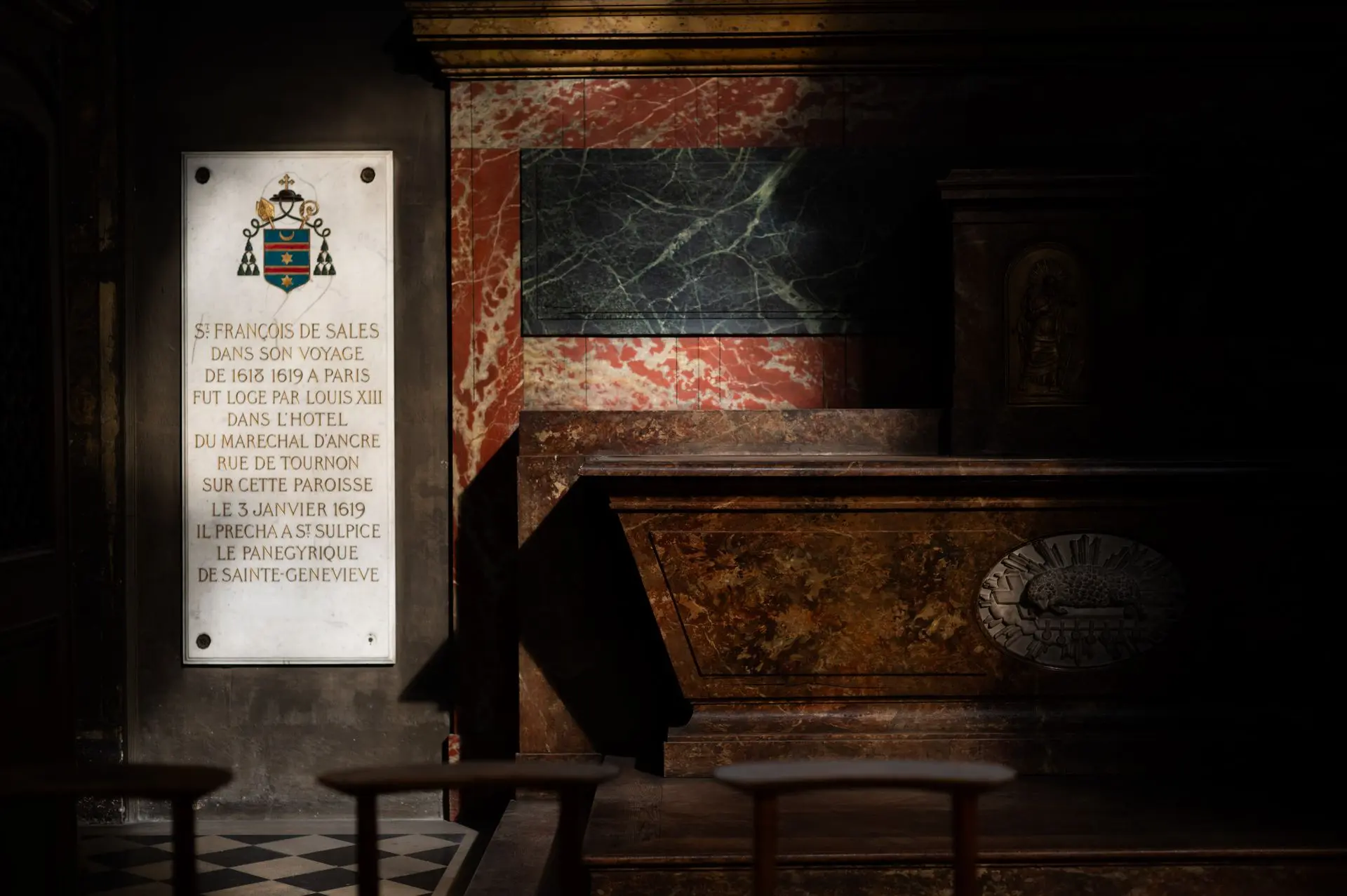
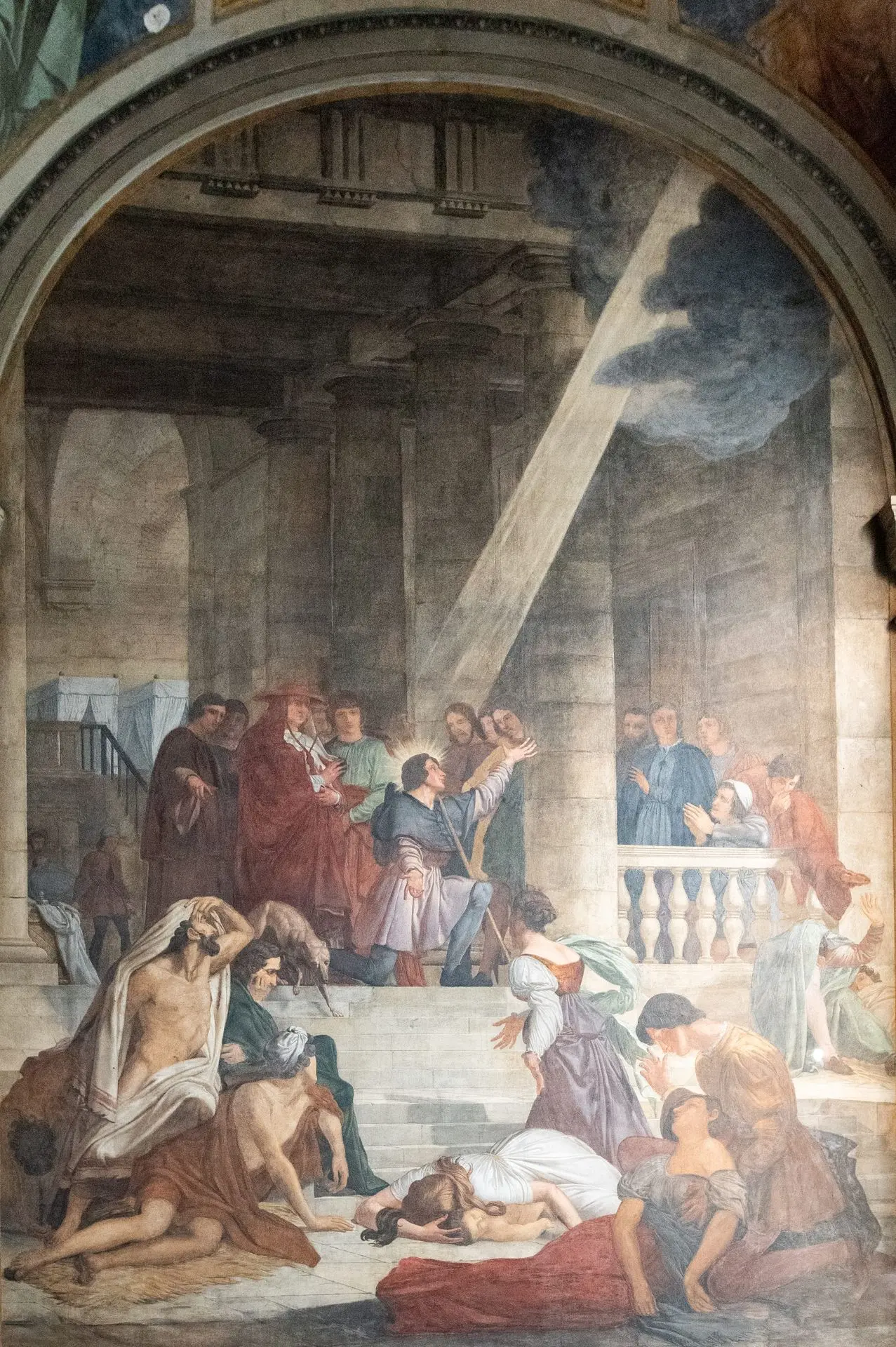
The central nave is flanked by side aisles opening onto ten chapels:
- On the south: the Chapels of the Holy Angels, the Souls in Purgatory, Saint Roch, Saint Maurice, and Saint John the Baptist.
- On the north: the Chapels of Saint Francis Xavier, Saint Francis de Sales, Saint Paul, Saint Vincent de Paul, and the Sacred Heart.
Beyond the transept are two sacristies — the south for Mass-related preparations and the north for weddings.
The ambulatory around the choir leads to nine radiating chapels, from south to north: Saint Denis, Saint Martin, Saint Genevieve, Saint Anne, the central Chapel of the Blessed Virgin, then Saint Louis, Saint Joseph, Saint Charles Borromeo, and Saint John the Evangelist.
The Church’s Decorations
Saint-Sulpice is widely regarded as one of the most important churches in Paris, housing numerous masterpieces of religious art created in the 18th and 19th centuries by renowned artists.
In the Chapel of the Holy Angels, painter Eugène Delacroix (1798–1863) created three highlights: Heliodorus Driven from the Temple, Jacob Wrestles with the Angel, and Saint Michael Vanquishing the Dragon.
In the Chapel of the Virgin, François Lemoyne (1688–1737) painted an opulent program from 1730–1732 — The Glorification or Assumption of the Virgin.
The church also preserves remarkable sculpture: Venetian Republic holy water fonts gifted to François I and mounted on marble bases sculpted by Jean-Baptiste Pigalle (1714–1785); The baroque tomb of parish priest Jean-Baptiste Languet de Gergy by Michel-Ange Slodtz (1705–1764); Sculptures in the Baptism Chapel by Louis Boizot (1743–1809); Choir sculptures by Edme Bouchardon (1698–1762); And the marble and carved wood pulpit designed by Charles de Wailly (1730–1798).
The Chapel of the Virgin: A Masterpiece
This baroque chapel in the apse features a niche carved by Charles de Wailly (1730-1798) in 1774, illuminating Jean-Baptiste Pigalle’s statue of the Virgin with a source of natural light invisible from the ambulatory.
The frescoed dome, painted by François Lemoyne in 1732, depicts the Virgin Mary’s ascent into heaven on a cloud, surrounded by sculpted putti by the Slodtz brothers.
On either side, wall paintings by Carle van Loo (1705–1765) illustrate scenes from the life of the Virgin.
RESTORATIONS
The church is gradually regaining its splendour
With the help of public and private funding, nearly half of the church’s chapels have been restored to their original colors and gilding:
- Chapel of the Holy Angels in 2016
- Chapel of the Souls in Purgatory in 2020
- Chapel of Saint John the Baptist in 2020
- Chapel of Saint Anne in 2022
- Chapel of Saint Joseph in 2023
- Chapel of Saint Maurice in 2024
- Chapel of the Virgin in 2024
- Chapel of Saint Genevieve in 2024
- Chapel of Saint Martin in 2025
- Chapel of Saint Denis in 2025
The decoration of the Saint-Louis Chapel remains the only major section in this part of the building not yet restored: help us complete this work!
The Chapel of the Virgin represents the latest major restoration project led by the City of Paris with support from the Fondation Avenir du Patrimoine à Paris, made possible through the generosity of Mr. & Mrs. François Pinault in memory of their daughter Florence Rogers (1963–2021).